
Choosing between clear aligners and metal braces is genuinely confusing.
Not because there isn’t enough information out there — there’s too much, and most of it contradicts itself depending on who wrote it and what they’re trying to sell. Aligners get marketed as the modern, invisible, hassle-free solution. Braces get written off as old technology that nobody really needs anymore. Neither of these pictures is accurate, and neither helps someone who actually has crooked teeth and needs to figure out what to do about them.
People looking for orthodontic treatment at a dental clinic in Bopal or anywhere in Ahmedabad are usually asking the same basic questions — will it work, how much will it cost, will anyone be able to tell I’m wearing something, and how long is this going to take? This article tries to answer those questions honestly, without glossing over the parts that are less convenient.
The short version: both options work. But they work for different cases, different lifestyles, and different budgets. Knowing which category you fall into before you sit in a consultation chair makes the whole process significantly less stressful.
What Are Clear Aligners and How Do They Work?
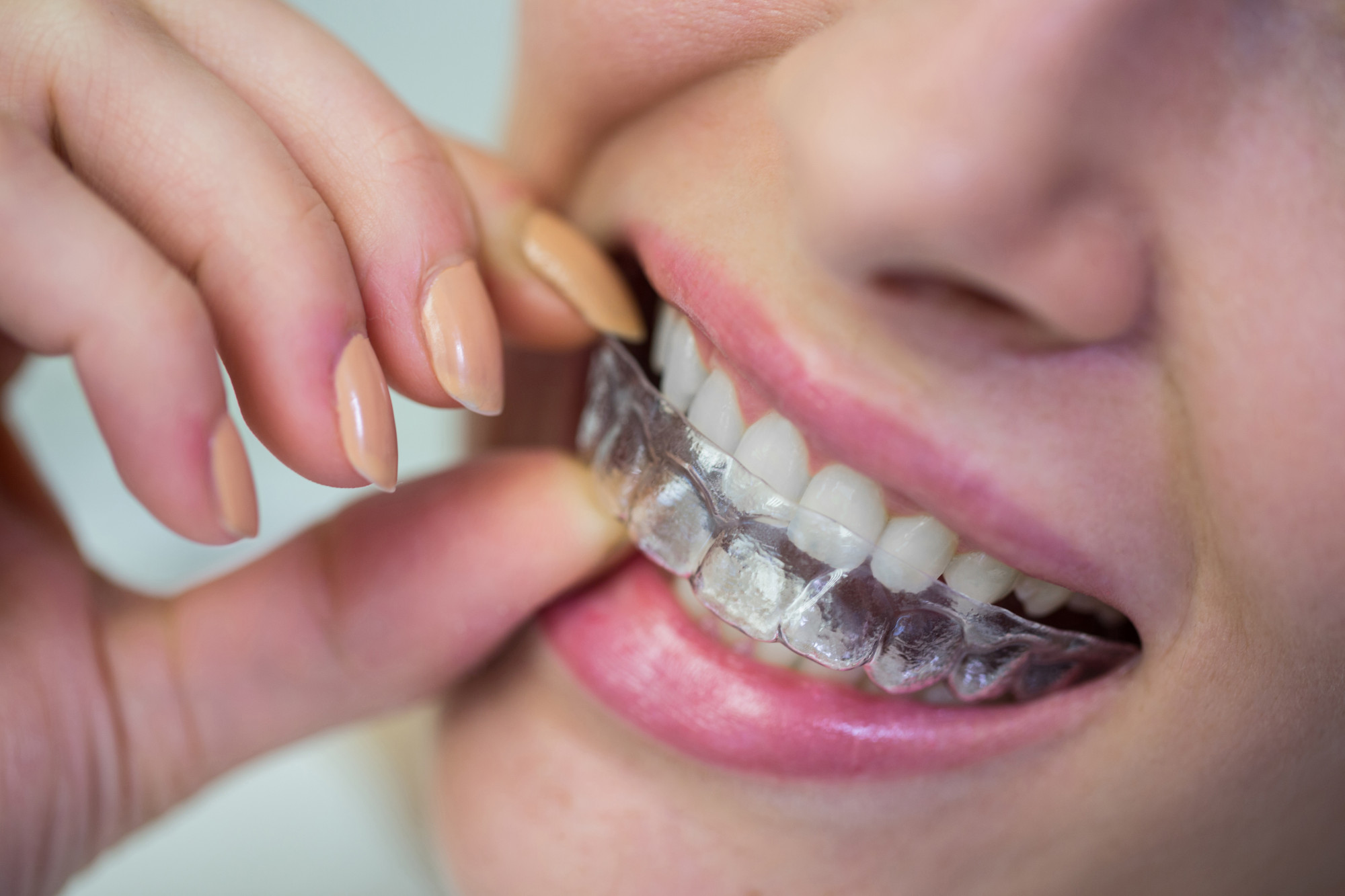
Clear aligners are a series of transparent plastic trays, each one custom-made to fit a specific patient’s teeth. Each tray in the sequence is slightly different from the one before, and wearing them in order — swapping to the next tray every week or so — nudges teeth incrementally toward the intended position. The whole treatment is mapped out digitally before a single tray is manufactured, so the full movement plan is set from day one.
The removability is what makes them appealing. You take them out to eat, to brush, to attend a function where the last thing you want is something on your teeth. For a lot of adults living and working in Ahmedabad — people in client meetings, on camera, in social situations — this matters in a way that’s hard to put a number on.
But the removability is also the thing that can sink the treatment. Aligners only move teeth while they’re actually in the mouth. The minimum is twenty to twenty-two hours a day. That leaves roughly two hours for everything else — meals, snacks, that extra cup of chai, brushing. Patients who regularly fall short of this find their teeth aren’t progressing as planned, and the treatment either drags on or doesn’t finish properly. This is the most important thing to understand about aligners before choosing them.
What cases do they handle well? Mild to moderate crowding, spacing issues, and certain bite corrections are within their range. More complex problems — large rotations, significant bite discrepancies, skeletal issues — are where fixed braces tend to deliver more predictable results. Whether a case is suitable for aligners is something only a clinical examination can determine.
What Are Metal Braces and When Are They Recommended?
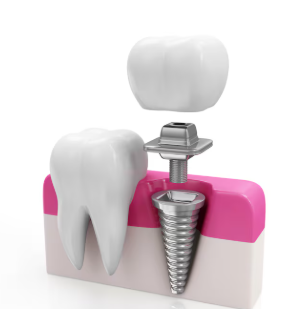
Metal braces have a reputation problem. People hear the words and picture something bulky and uncomfortable from a decade ago. Modern braces are neither.
The brackets are considerably smaller than earlier versions. The wires are more efficient — many now respond to body heat and apply a gentler, more consistent force than old stainless steel wires did. Adjustment appointments are less frequent. The overall experience is noticeably different from what patients who had braces in the 2000s might remember.
What hasn’t changed is why braces remain the gold standard for complex orthodontic cases. They’re fixed bonded directly to each tooth which means the force applied to each tooth is constant and precisely controlled. There’s no variable of whether the patient remembered to put something back in after lunch. For cases that need a high level of three-dimensional control over tooth movement, that consistency produces results that removable trays can’t reliably replicate.
Ceramic braces are worth mentioning here the same mechanism as metal, but with tooth-coloured brackets that are much less visible. They cost a bit more and can stain if you drink a lot of coffee or tea without being careful, but for patients who need fixed treatment and care about how they look during the process, ceramic is a real option. Several good dental clinics in South Bopal and across Ahmedabad now offer ceramic braces as a standard option alongside metal.
Clear Aligners vs Metal Braces: Key Differences You Should Know
Here’s where it gets practical.
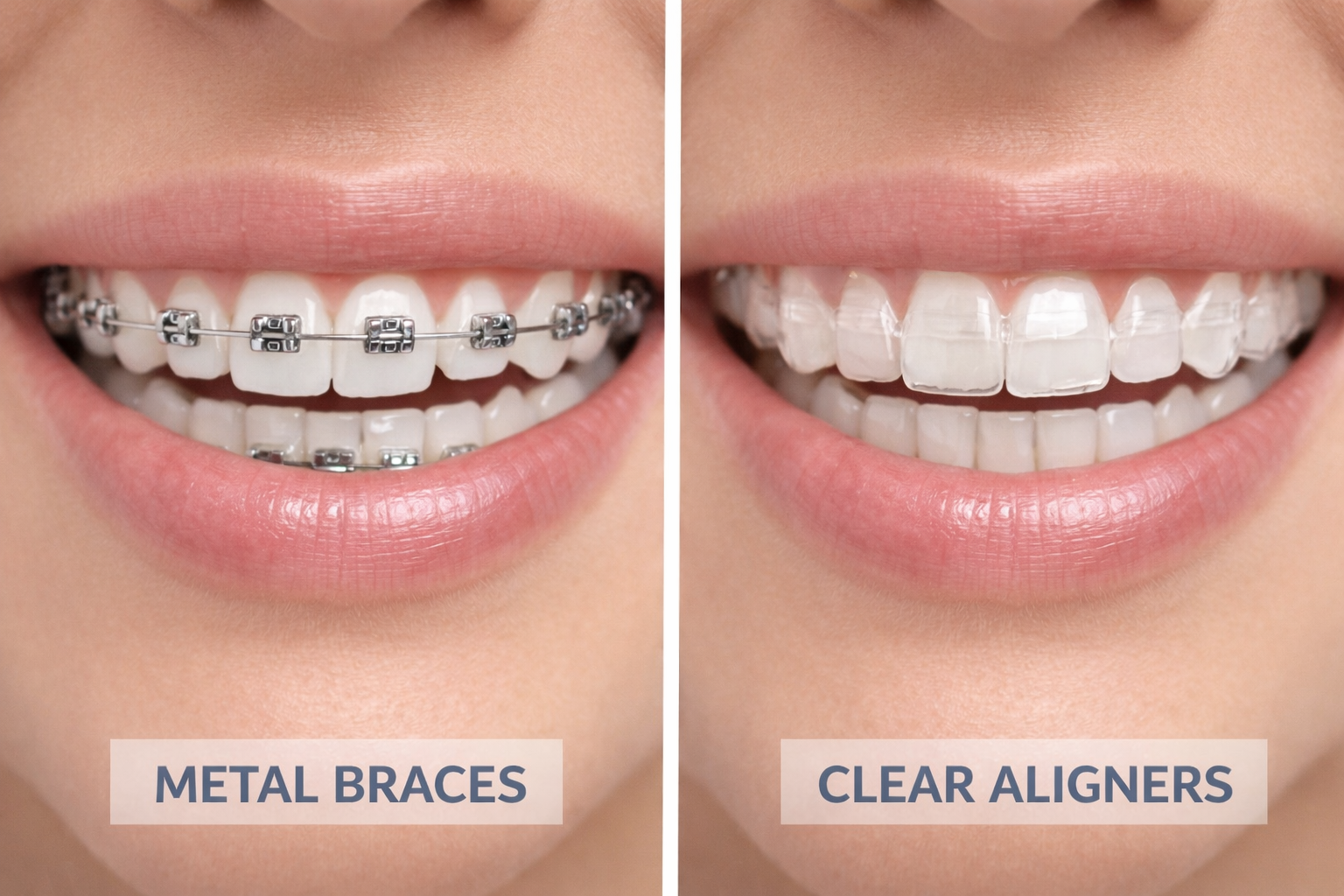
Visibility is the obvious one and doesn’t need much explanation. Aligners at conversational distance are nearly invisible. Metal brackets are not. Ceramic brackets are somewhere in between. If you’re a professional in Bopal or Ahmedabad who spends most of the workday interacting with people face to face, this isn’t vanity — it’s a real quality-of-life consideration for a treatment that’s going to run twelve to twenty-four months.
Comfort is more complicated than the ads make it sound. Aligners cause pressure when you switch to a new tray — the first day or two of each tray cycle is genuinely uncomfortable for most people, not just mildly noticeable. Metal braces cause soreness after adjustment appointments and occasional irritation from brackets against the inner cheek until the mouth adjusts to them. Neither option is pain-free throughout. Expecting one to be significantly more comfortable than the other usually leads to disappointment.
Diet is a real difference. With metal braces, hard and sticky foods are off the table for the duration of treatment — not as a precaution but as a necessity, because they can bend wires and knock off brackets. Raw carrots, hard nuts, caramel, crusty bread — these become problematic, not just inconvenient. With aligners, the trays come out before eating so there’s no restriction, though the discipline of removing and replacing them around every meal takes getting used to.
Cleaning is easier with aligners. The trays come out, teeth get brushed and flossed normally, trays go back in. With braces, cleaning properly around the brackets and under the archwire needs specific tools and a more involved routine. Skip this consistently and there’s a real risk of white spot lesions — areas of enamel damage that show up around the brackets and stay visible even after the braces come off. Not everyone gets them, but poor hygiene during treatment makes them far more likely.
And then there’s the clinical question — which treatment is actually right for the case. This one sits above all the others. The lifestyle and aesthetic factors matter, but they’re secondary to whether the treatment is going to produce the intended result.
Cost of Clear Aligners vs Metal Braces in Ahmedabad
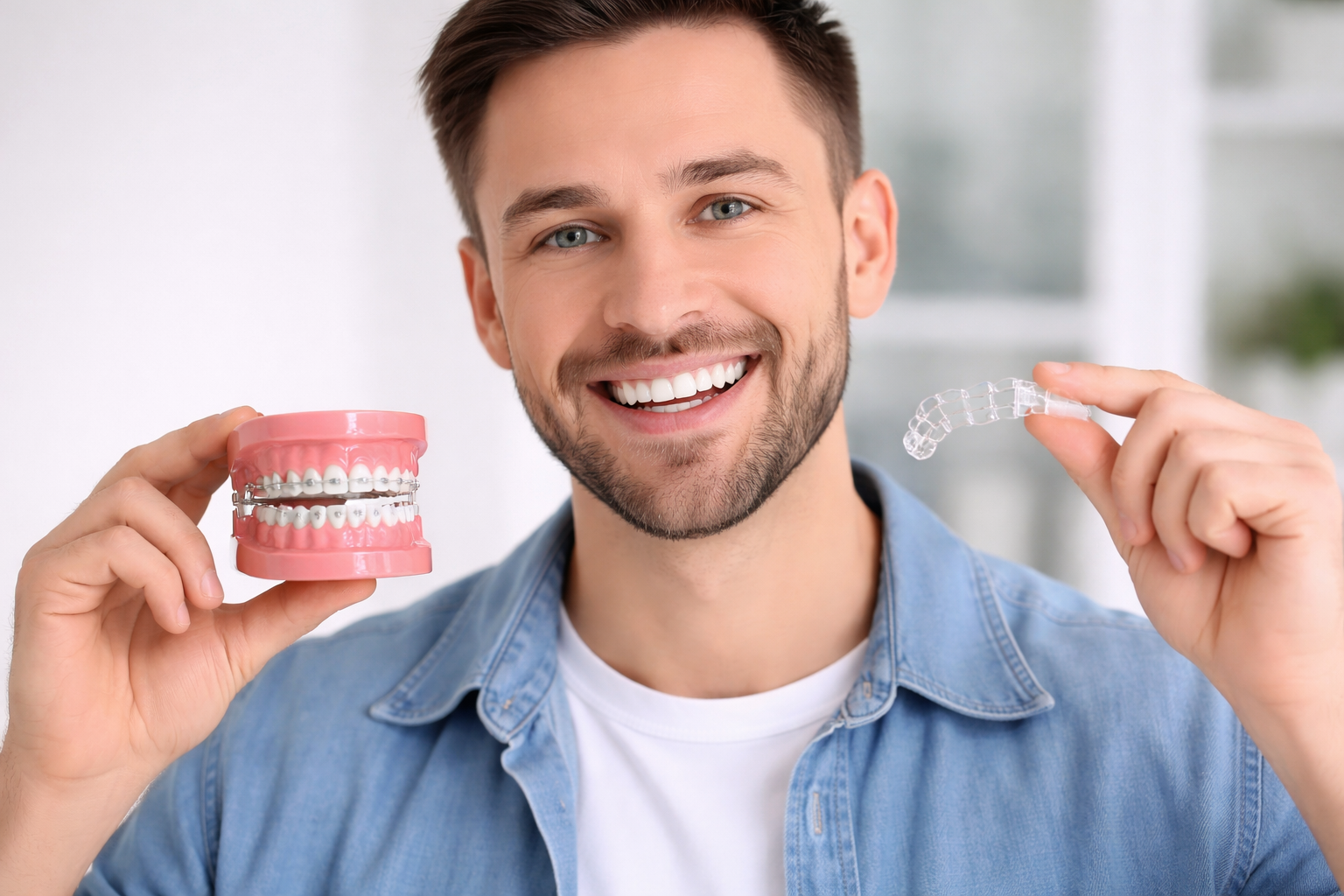
The cost difference between these two options in Ahmedabad is significant, and it’s worth going through carefully.
Metal braces typically range from ₹25,000 to ₹60,000 for a full course of treatment at a reputable dental clinic in Bopal or elsewhere in the city. Ceramic braces sit toward the upper end of that range. The variation within metal braces reflects treatment complexity, duration, and what’s included.
Clear aligners are more expensive — usually between ₹80,000 and ₹2,50,000 depending on the brand and complexity of the case. Invisalign, being the international premium system, sits toward the higher end. Other aligner systems available in India are more affordable, though quality of outcome varies depending on the case type and the clinical oversight behind the treatment.
What both options have in common — and what often gets left out of the upfront cost conversation — is the retainer. After active treatment ends, whether with aligners or braces, teeth will gradually drift back toward their original positions if nothing is holding them in place. Retainers are non-negotiable. They’re worn full-time immediately after treatment, then night-time only for an extended period — sometimes years. The cost of retainers is separate from the treatment cost, and it’s a fair question to ask about before committing to anything.
At Dentafix Dental Clinic in South Bopal, Ahmedabad, pricing for both options is laid out in full at the initial consultation — treatment cost, retainer cost, and what happens if refinements are needed. No surprises at the end.
How to Choose the Right Orthodontic Treatment for Your Smile

Start with a proper assessment. Not a YouTube comparison video, not what worked for someone in the family, not what seemed most modern — an actual in-person clinical examination with X-rays or 3D scans and an orthodontist who can look at the full picture.
The complexity of the case determines which treatment is appropriate. And complexity can’t be assessed from the front teeth alone. Root positions, bone levels, bite mechanics, gum health — all of it feeds into the recommendation. Cases that look simple from the outside sometimes aren’t, and a proper examination catches that before treatment starts rather than in the middle of it.
During the consultation, it’s worth asking directly: would my case do better with aligners or braces, and why? The answer should be clinical — rooted in the specifics of the case — not commercial. If the recommendation feels like it’s tilting toward the more expensive option without a clear reason, that’s worth pressing on.
Be honest about lifestyle too. The twenty-two-hour wear requirement for aligners is not negotiable. Patients with irregular schedules, frequent work dinners, or a general tendency to forget about habits they’ve set themselves often find the reality harder than they expected. Braces remove that variable entirely, which for some people is genuinely the more practical — and more efficient — choice.
Dentafix Dental Clinic in South Bopal is a trusted dental clinic in Bopal offering orthodontic consultations for both clear aligner treatment and metal or ceramic braces. Patients from across Bopal, Shela, Ambli, Ghuma and Ahmedabad come here for straightforward assessments and treatment that matches the case not just the preference.
Frequently Asked Questions:
Q1. Can clear aligners fix all types of misalignment?
No — mild to moderate cases are within their range, but complex bite and rotation issues typically need braces for reliable results.
Q2. Are clear aligners uncomfortable to wear?
There is pressure when switching to a new tray, usually settling within a couple of days — most patients manage it without much difficulty.
Q3. How long does orthodontic treatment take in Ahmedabad?
Anywhere from 12 to 24 months depending on case complexity and the treatment used.
Q4. Can adults get braces or aligners?
Yes — adults respond well to both, though treatment takes a little longer than it does in teenagers.
Q5. Is a retainer necessary after orthodontic treatment?
Always — teeth will shift back without a retainer, so it’s a non-negotiable part of completing the process.
Q6. What does aligner treatment cost at Dentafix Dental Clinic in Bopal?
Treatment ranges from ₹80,000 to ₹2,50,000 depending on the system and complexity — full pricing is discussed at the consultation.
Q7. Are ceramic braces better than metal braces?
Less visible, not clinically superior — both work the same way, and the choice depends on aesthetics and budget.
Q8. How many hours per day do aligners need to be worn?
Twenty to twenty-two hours minimum — consistent shortfalls mean teeth won’t track to plan and treatment extends.
Q9. Are there food restrictions with metal braces?
Yes — hard, sticky and crunchy foods that could bend wires or dislodge brackets need to be avoided throughout treatment.
Who Is the Right Candidate for Clear Aligners or Metal Braces?
This is the question that should come before all the others. And the answer is more individual than most people want.
Clear aligners tend to suit adults and older teenagers with mild to moderate crowding or spacing, patients who are genuinely disciplined about the wear time requirement, and people for whom having visible orthodontic appliances during treatment is a real concern. Cases where the clinical complexity falls within the range that aligner mechanics can handle are the obvious prerequisite.
Metal braces are usually the stronger recommendation for younger patients still in active growth phases, for more complex orthodontic cases involving significant bite correction or large tooth rotations, and for patients who have any doubt about their ability to keep removable trays in consistently. The patients who end up most frustrated with orthodontic treatment are often the ones who chose aligners, struggled with compliance, and had to switch to braces mid-treatment — which costs more time and money than simply starting with braces would have.
Age doesn’t disqualify adults from orthodontic treatment — this is a common misconception. Teeth move orthodontically at any adult age. What changes is the pace: adult bone is denser, so movement is slower, and treatment runs longer than it would for a teenager. The main adult-specific consideration is the health of the gum and bone tissue before starting, since orthodontic forces applied to compromised periodontal support creates its own problems. A thorough examination at a good dental clinic in Bopal or anywhere in Ahmedabad will assess this before treatment begins.